Rare machinery deserves rare care. If you own a split-window Corvette, a first-series E-Type, or a late-model Bentley with more modules than a small jet, the logistics of moving it matter as much as the destination. Concord has the name recognition most people associate with speed, but among collectors and high-end owners, it also cues a set of standards. The best Concord car transport isn’t a single service or a single route. It’s a way of working that minimizes touchpoints, controls variables, and treats time and documentation with the same seriousness as paint depth and panel gaps.
I’ve arranged relocations for six-figure builds heading to Pebble Beach, concours entries coming back from detailers, and family heirlooms changing hands quietly between collectors. The difference between a smooth shipment and an anxiety-ridden one almost never comes down to luck. It comes down to preparation, the right carrier configuration, disciplined communication, and a broker or operator who knows when to say no to a shortcut. If you’re evaluating Concord car shippers, here’s the level of scrutiny and care that should be non-negotiable.
What “specialized” really means for high-value vehicles
Specialized, in this context, doesn’t mean “nice truck and careful drivers.” It means the company reads your car like a checklist of risk vectors and then designs the move to neutralize them. Low clearances, fragile splitters, aged seals, irreplaceable trim, electronic suspensions that sleep when they shouldn’t, battery management systems that hate cold, nitrocellulose paint that still outgasses under certain temperatures, center-lock wheels that need specific torque. Concord car transportation services that work regularly with concours and luxury vehicles build every job plan around these details.
For a numbers frame, think in terms of risk per touch. Each additional hand that straps or steers adds another variable. Enclosed, single- or dual-vehicle moves keep the touches to a minimum. Multi-car open carriers introduce more loading events, angles, and wait times. They still have a place for mainstream relocations, but not when a millimeter matters. Good Concord auto transport companies will tell you this upfront, even if it means quoting a higher rate and a longer lead time.
The right kind of truck and why it matters
The rig is your first line of defense against bad outcomes. Enclosed carriers come in flavors, and the differences are practical, not just marketing.
Soft-sided versus hard-sided. Soft-sided enclosures keep road grime and stones out, yet they flex in crosswinds, can slap against bodywork, and don’t insulate as well. Hard-sided trailers behave more like a climate buffer. They protect against weather, UV, and the occasional inattentive forklift at a yard. If your paint is fresh or your car has delicate trim, insist on hard-sided.
Liftgate over ramps. A hydraulic liftgate lowers the car vertically and eliminates steep approach angles. Ramps, even with extenders, create a seesaw that can kiss front splitters or exhausts. Any Concord car transport professional moving a GT car, lowered build, or prewar machine with long overhangs will specify a liftgate. If you see ramps only, you’re already negotiating compromises.
Air-ride suspension. The trailer’s suspension influences vibration transfer. Properly maintained air-ride mitigates the shocks that loosen trim, fatigue mounts, or wake an alarm system every sixty miles. I’ve seen a car arrive with a rearview mirror on the floor because the rig had a bad bellow and bounced across the Central Valley.
Climate and airflow. Full climate control is rare and expensive, but some enclosed units manage temperature better than others. Ventilation matters with vintage paint and interiors. If a car has been recently detailed or ceramic coated, tell the carrier so they can avoid heat build-up during staging.
Pre-transport preparation that actually saves you money
Owners sometimes focus on the carrier and forget how much control they have over the readiness of the vehicle. Ten percent more preparation at the pickup end yields ninety percent fewer surprises at delivery.
Photograph deliberately, not casually. Shoot every panel in good light, square to the surface, and include close-ups of vulnerable areas like chip-prone lower quarters. Capture the wheels, splitter corners, rocker edges, the underside of the nose, and the rear valance. If the driver knows you’ve cataloged condition with that level of specificity, the handling improves. It shouldn’t be that way, but it is.
Protect high-risk contact points. If the car isn’t freshly detailed, consider clean wrap for front tips, mirror edges, and rocker zones. Avoid adhesive films on fragile paint, older single-stage finishes, or graphics that might lift. A good Concord car transporter can supply foam covers or padded blankets for mirrors and wings. Confirm in writing if they will.
Battery, fuel, and drive modes. Modern luxury cars lock themselves into a paranoia loop when the voltage sags or when motion sensors detect transport vibration. Disable motion tilt alarms and transport-lock the air suspension where possible. Set the car to the lowest power draw mode, and ensure the battery is topped off. Leave a quarter tank of fuel. More fuel adds unnecessary mass, less invites condensation issues in certain climates.
Keys and immobilizers. Provide the valet key and the primary fob. Document any nonstandard immobilizer steps. Nothing burns time like a hidden kill switch that the driver discovers in a storage lot after dark.
Spare parts and loose items. Remove show plaques, tool rolls, trophies, period manuals, and extra trim. If high-value spares must ride in the car, note them in the bill of lading and consider a small lockbox secured inside the trunk. Loose objects become projectiles on a hard brake.
Direct carrier or broker, and how to judge each
A question I hear often: should I deal only with a carrier or is a broker acceptable? The truth is more nuanced. Many of the best Concord car shippers function as specialized brokers and dispatchers who curate a tight network of vetted carriers. They get you the right equipment quickly, then track and manage the load.
You want transparency about who actually touches the car. Ask for the MC and DOT numbers of the carrier, proof of cargo insurance limits that match your vehicle’s value, and recent references. Do not accept “full coverage” as an answer. If your car is worth 450,000 dollars, a carrier with 250,000 dollars cargo coverage is not a fit unless they secure a rider for that shipment. Confirm in writing.
A direct carrier can be ideal if your timing matches their lane. The trade-off is flexibility. A curated broker with real Concord car transportation services experience can often stage a liftgate truck within 48 to 72 hours because they have three options instead of one. The wrong broker, on the other hand, will spray your job onto a national board and hope someone picks it up for less than the quote. That’s when you see price squeezes, late-night calls, and “can we pick up at the corner instead” requests. You can avoid this by insisting on one dispatcher, one driver assignment, and a written clause against re-brokering.
Insurance, valuation, and the language that matters
Insurance conversations go sideways when terms get fuzzy. Ask for the carrier’s cargo policy declarations page, not just a certificate. Look for:
- Cargo coverage limits that equal or exceed the stated vehicle value. Exclusions for specific vehicle types, aftermarket parts, or theft from an unattended vehicle. Deductible amounts and who bears them in an incident.
Your own collector or agreed-value policy may cover transport, but some underwriters require you to use approved Concord auto transport companies or notify them before transit. If you have a concours-level car with period-correct but fragile paint, ask whether the policy treats transport-induced micro-marring or strap rash as covered. Many do not. This is where the choice of tiedown method matters.
Tie-down methods and why some cars hate wheel straps
Wheel straps are the default for most modern cars. Securing at the tires avoids stressing suspension points or underbody seams. For performance cars with very little wheel well clearance or with carbon ceramic rotors, wide straps can rub or trap debris. Twelve-point soft tie systems with fleece sleeves add a layer of safety. For classics with wire wheels or spats, wheel straps may be wrong. Axle straps or frame points can be safer, but only if the car has reinforced locations and the driver knows them.
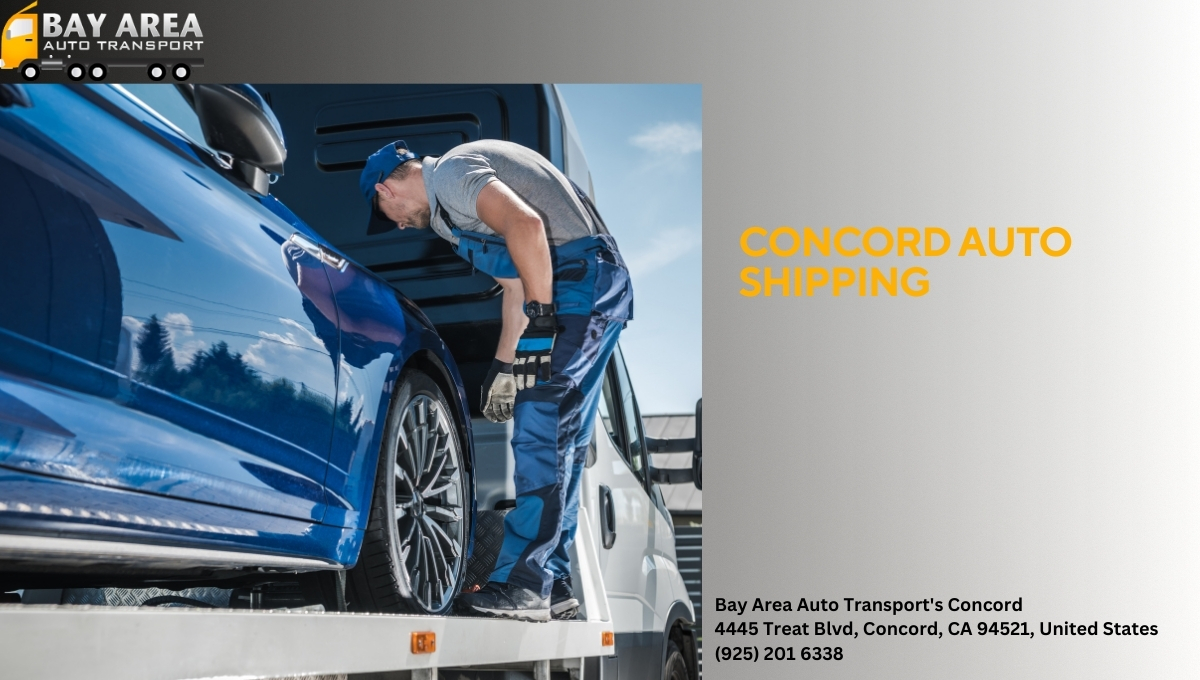
I’ve shipped 50s-era cars that still had original undercoating and hand-rolled edges on the pinch welds. A strap in the wrong place leaves a permanent crease. Competent Concord car transport crews carry a library of strap protectors, blocks, and pads and will ask for a diagram when the car is uncommon. If a driver seems surprised by a straightforward tie-down question, that’s a tell.
Timing, routing, and the weather game
Owners often ask for the soonest pickup. Speed is useful, but predictability is better. Weather windows move quickly in the Sierras and across Tehachapi. A storm that dumps on Donner Pass can delay an otherwise direct route by a full day, even in an enclosed rig. If your timeframe is tight and the car’s value is high, build in a buffer and give the operator permission to hold for a better weather day. You will pay for a day of staging, but you will avoid a dozen risks, among them temperature swings that trigger battery management issues and salt fog that creeps into vented trailers.
Routing matters for low-clearance cars. Some municipal streets and driveways were not designed with a 53-foot trailer in mind. Good carriers run a satellite view ahead of time and, if necessary, stage with a smaller truck for the last quarter mile. Be suspicious of anyone who plans to back an enclosed rig down a steep, curved driveway sight unseen.
Communication that calms, not clutters
The best Concord car shippers keep updates short and precise. Pickup ETA, load confirmation with photos, departure timestamp, mid-route check-ins at logical intervals, and a delivery window with a 60-minute heads-up. That’s enough. More messages do not equal more care.
Ask for the driver’s direct number once the job is dispatched. Dispatch desks are useful for planning, but the driver knows when the rig is parked, whether they encountered rough pavement, and if the trailer needed to be rebalanced after a second pickup. If the company resists sharing the driver’s contact information, clarify how they handle after-hours issues. Your show doesn’t wait for business hours.
Real-world pricing and what drives it
Rates drift with diesel prices, seasonality, and lane demand. Enclosed, liftgate-equipped rigs command a premium. For a typical Northern California pickup and delivery to the Los Angeles basin, expect a single-car enclosed move in the 1,400 to 2,200 dollars range when scheduled with a week’s notice. Coast-to-coast enclosed with a liftgate for a single vehicle generally lands between 3,500 and 6,000 dollars depending on timing, route, and congestion. Add climate control or a double-driver team and the number climbs.
Beware of the too-smooth quote that arrives faster than your specs. A price that is 20 percent below the median usually means someone plans Bay Area Auto Transport's Concord to load your car alongside three others and work it into the schedule as space allows. That can be fine for a standard sedan. It isn’t fine for a long-wheelbase Rolls with a sensitive battery tender port.
Edge cases: prewar, EVs, and bespoke builds
Not all “special” cars are the same. A 1930s Packard has marquetry that dries out in heat and cloth wiring that hates vibration. It may also leak a teaspoon of oil every few hours. Ask for drip trays in the trailer and confirm that the driver knows crank procedures if needed. Some prewar cars must be winched because they lack modern brakes, and some need tire blocks that match period tire profiles.
EVs present their own profile. Transporting a battery-electric vehicle requires knowledge about tow modes and 12-volt support. Many EVs enter deep sleep during transport and can present as “dead” at delivery even with a healthy traction pack. Confirm the sequence to enable transport mode, any speed limitations for rolling, and where to connect a 12-volt booster safely. Also prepare for weight. An EV luxury sedan can weigh 5,000 to 6,000 pounds, altering the trailer’s load plan.
Bespoke builds with air ride and body kits demand gentle angles and patience. Give the operator instructions on the management system, including how to manually override a stuck solenoid. Share ride height measurements at the nose, mid-span, and tail. If the front lip sits 3.5 inches off the ground, the driver needs more than generic ramps, even with a liftgate.
Pickup and delivery etiquette that protects the car
Everything goes smoother when the location works for the rig. Street width, overhanging trees, cul-de-sacs, and aggressive speed bumps all factor. If the carrier suggests meeting at a nearby commercial lot, they usually have a reason. A clean, flat surface makes a difference when the liftgate drops.
At pickup, do a joint walkaround with the driver and annotate the bill of lading with specifics, not just “no damage.” Note existing rock chips, small scuffs, and wheel rash, as well as any mechanical quirks. Share how the parking brake engages and whether the transmission has a hidden release.
At delivery, repeat the walkaround before signatures. This is where your earlier photographs pay off. Look for subtle strap rub lines on tires, faint marks near tie-down points, and any new marring on soft finishes. Check panel gaps for shifts that might indicate a strap was overtightened. If something seems off, note it immediately on the bill of lading and photograph it. Polite firmness gets better results than theatrics.
When enclosed is optional, and when it isn’t
A solid driver with an open, well-maintained carrier can move a standard car cross-country without drama. The calculus changes with high-value or delicate vehicles. If the car has:
- Low clearance or aero pieces vulnerable to ramp angles, Fresh paint or soft finishes, Known water ingress points or sensitive electronics, High market or sentimental value that outstrips the cost delta,
then enclosed is the baseline, not an upsell. If a carrier tries to talk you into open transit to save money without acknowledging these factors, they’re misreading the job.
Working with Concord auto transport companies that know events
Event logistics have their own rhythm. For Pebble Beach, The Quail, or Sonoma Speed Festival, carriers book out weeks in advance and parking rules near venues can force creative staging. A company that regularly services Concord and the Bay Area’s collector scene will anticipate credential checks, early-morning delivery windows, and the tight clearances of some concours lawns or display tents.
Share your schedule, not just your address. If you have a Friday 7 a.m. detail slot at the host hotel, the drop can’t be Friday morning at 7:30. Ask whether the driver plans overnight staging within 20 minutes of the venue. If your car needs a quick wipe-down from trailer dust, confirm that the driver can position the trailer in a space where you can work without drawing a crowd.
Red flags that save you grief
Two-minute phone quotes that ignore your car’s specifics. Insurance certificates without a declarations page. Vague answers about loads and routes. Dispatchers who promise exact pickup times days in advance, despite traffic, weather, and DOT hours-of-service limits. Requests to pay most of the fee in cash at delivery. Resistance to sharing the driver’s name or number. Any of these are either inexperience or indifference. Neither belongs near your car.
A lean checklist you can actually use
- Verify cargo insurance matches your car’s value, with documentation. Specify enclosed, hard-sided trailer with a liftgate and air-ride. Provide clear photos, special handling notes, and key procedures. Confirm driver contact, pickup access, and delivery staging plan. Walk the car at pickup and delivery, noting details on the bill of lading.
Why the locality matters
Concord sits at a crossroads for Northern California logistics. The nexus of I-680, Highway 4, and proximity to the Port of Oakland and Bay Area event venues creates both access and congestion. Operators who run Concord regularly know which hours the Caldecott Tunnel eats schedules and which neighborhoods push trailers into awkward turns. That experience translates into tangible protection for your car because time pressure is the enemy of careful work. Reputable Concord car transport providers build timing margins into the route. They also know which secure yards are worth using for overnight staging and which are just fenced lots with a dog and a light bulb.
For owners outside the area, this local knowledge looks like small but meaningful choices. A driver who chooses a certain on-ramp to avoid a brutal expansion joint. A dispatcher who schedules eastbound departures to miss the Contra Costa morning surge. A delivery plan that brings the car in at first light when surfaces are cooler and traffic is light, reducing stress on both machine and crew.
The human factor: drivers make the difference
You can spec the perfect trailer, write a flawless plan, and still lose the plot if the driver is hurried or careless. The best drivers I’ve known are detail-obsessed and unflappable. They carry extra wheel chocks, soft sleeves, and ratchets that don’t bind. They ask questions and listen. They understand that a quarter turn on a strap is the difference between secure and stress. When you talk to a prospective Concord car transporter, listen for that mindset. If they refer to your car as “the unit,” you might be dealing with a volume operator. If they ask whether your E-Type has the original bonnet latches and whether they need to bring low-angle skids for the liftgate, you’ve found someone who sees the car, not just the job.
Final thought, with an eye to the next move
Good transport habits stack. Once you’ve built a clean file for a car — the photos, the handling notes, the battery settings, the right contact list — every subsequent move gets easier, safer, and often cheaper. You become the client carriers want because your jobs run on time and without mystery. In turn, you get first call when a liftgate slot opens up on a full route. That’s the quiet advantage owners in the Concord scene leverage. They don’t chase the rock-bottom rate. They invest in a consistent relationship with Concord car shippers who have earned trust.
You don’t have to be a full-time collector to take the same approach. Vet two or three Concord auto transport companies the way you’d vet a restoration shop. Inspect a trailer in person once, if feasible. Learn the names of the people who will touch your car. Write down what works and keep it with the title and service records. The next time your classic heads to a specialist across the Bay, or your luxury sedan needs to meet you at a new home on the other coast, you won’t be starting over. You’ll be refining a process that respects the machine and your peace of mind, which is the real point of specialized transport.
Contact Us
Bay Area Auto Transport's Concord
4445 Treat Blvd, Concord, CA 94521, United States
Phone: (925) 201 6338